
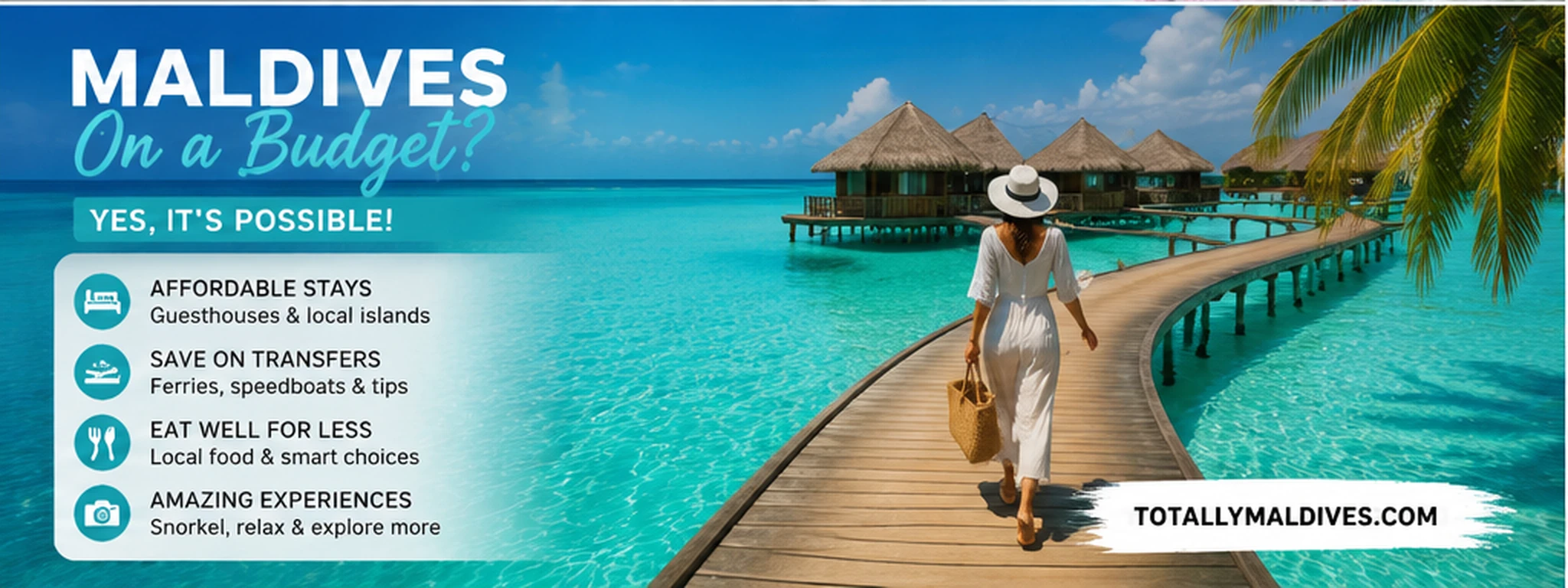
The Maldives can be an expensive holiday, but “expensive” is not a useful budget. The country really has several travel models: private-island resorts, inhabited local islands, liveaboards, and combinations of the three. The biggest saving usually comes from choosing the right model and transfer geography, not from shaving a few dollars off a nightly room rate.
Start with the total trip, not the hotel headline
A resort can advertise an attractive room rate while the mandatory return transfer, taxes, service charge and meals materially change the final number. A local-island guesthouse can look dramatically cheaper but still needs boat fares, excursions and meals. Put every quote into the same spreadsheet before deciding.
The current taxes you should recognise
Maldives Inland Revenue Authority (MIRA) says the tourism-sector GST rate is 17% from 1 July 2025. Green Tax changed from 1 January 2025: tourists at resorts, resort hotels, hotels, tourist guesthouses and tourist vessels are generally charged USD 12 per person per day, while hotels and tourist guesthouses on inhabited islands with 50 rooms or fewer are charged USD 6 per person per day. Children under two are exempt from Green Tax.
These are statutory charges, but how a booking website displays them varies. Read the final price breakdown rather than assuming the first search-result figure is tax-inclusive.
Service charge is another separate line
The Maldives Service Charge Regulation requires tourism businesses such as resorts, hotels and tourist guesthouses to levy at least 10% service charge on services. That is different from GST and Green Tax. When you compare two quotes, check whether the displayed amount includes service charge and taxes or adds them later.
Resort budgeting: the transfer can change the winner
Transfer cost is one of the most important variables in a resort comparison. A speedboat-accessible resort near Velana may have a higher room rate but a cheaper and simpler transfer than a remote resort reached by seaplane. For a short stay or a family paying several transfer fares, that difference can outweigh the nightly saving.
Use our inter-island transfer guide to compare the practical trade-offs before paying a non-refundable deposit.
Meal plans: price the food you will actually eat
Private resort islands do not give you the normal city-travel option of walking to a cheap restaurant next door. Breakfast-only can work for light eaters or people with a generous room package, but half-board, full-board or all-inclusive can make spending more predictable. The catch is that plans differ: speciality restaurants, premium drinks, minibar items and excursions may still be extra.
All-inclusive is not automatically cheaper
It is valuable when you would genuinely buy the included drinks, meals and activities. It is poor value if you drink little, spend days diving away from the property or prefer one restaurant that is excluded from the plan. Ask for the inclusions list, not just the plan name.
Local islands change the budget completely
Inhabited islands such as Maafushi, Ukulhas and Thulusdhoo support guesthouses, local restaurants, independent dive centres and scheduled transport. Competition and local pricing can make accommodation and meals far cheaper than on private resort islands. The experience is different, not simply a discounted resort: local dress, alcohol restrictions and community life matter. Read our local-island guesthouse guide before choosing this route.
Excursions deserve their own budget line
Snorkelling trips, diving, whale-shark trips, manta trips, fishing, surf transfers and sandbank visits can be the highlights of a Maldives holiday. If you bury them inside “spending money”, they are easy to underestimate. Decide which two or three experiences matter most, price them with your actual island or resort, and leave a smaller flexible reserve for extras.
Diving can dominate an active traveller's budget
Certified divers should compare package prices, equipment rental, boat supplements, transfer requirements and any mandatory orientation dives rather than only the single-dive headline. New divers should price the whole course. A cheap room on an island with expensive or awkward dive logistics can be a false economy.
Alcohol is a resort/liveaboard cost, not a local-island purchase
Alcohol is not available as a normal local-island purchase. Travellers who want regular drinks should factor resort or liveaboard pricing into the comparison instead of assuming they can buy duty-free alcohol and take it to a guesthouse island.
Use geography as a budget tool
A seven-night holiday does not need three atolls. Every transfer consumes money and holiday time. Staying longer in one well-chosen place can deliver better value than chasing several “bucket-list” islands. If you do split the stay, group properties with a practical transport link; see our multi-resort itinerary guide.
Do not budget with a single daily-spend number
A resort guest on full board may spend almost nothing day to day and then pay a large transfer and excursion bill. A guesthouse traveller may have low fixed costs but pay separately for meals and activities. Split the budget into accommodation, compulsory charges, transfers, food/drink, activities and contingency instead.
A simple comparison method
- Take the final accommodation price for the exact dates and party size.
- Add mandatory return transfers for every traveller.
- Check whether GST, Green Tax and service charge are already included.
- Add the meal plan or a realistic food allowance.
- Add the two or three activities you actually care about.
- Add international travel, insurance and a weather/disruption reserve.
Where not to cut costs
Do not save money by creating a dangerously tight international connection, skipping suitable travel insurance for an expensive multi-sector itinerary, or choosing an unlicensed/unclear operator for water activities. A weather-disrupted transfer or medical evacuation can dwarf the saving.